top of page

Надвор од разумно сомневање

.jpeg)


Language


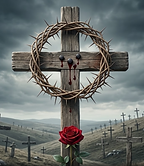


58% believe you can earn Heaven by being good
![The sanctuary of Grace Fellowship was built to impress. Spotlights cast a golden glow across polished hardwood, an acoustic guitar hummed through subwoofers, and Pastor Thomas stepped to the clear acrylic pulpit. He smiled with rehearsed warmth, adjusting his headset microphone.
"Church," Thomas began, his voice smooth and reassuring, "the beauty of the Cross is that the work is finished. The old rules, the heavy yoke, the bondage of that ancient covenant—it’s done away with. Jesus kept the commandments so you don’t have to. You don't need to worry about holy days, dietary restrictions, or falling under the curse of the Law. Just accept Him in your heart, enjoy His favor, and know that your mansion in the sky is guaranteed."
In the fourth row sat David, a worn, black leather Bible resting open on his lap. He had spent thirty years sitting on padded pews nodding along to sermons just like this one.
But six months ago, after a quiet evening spent reading Genesis straight through Revelation without study guides or denominational commentaries, the comfortable veneer had begun to crack.
David’s finger traced the text in 2 Peter 3:15–1 Peter’s voice echoed across two thousand years, ringing with solemn urgency: “...as also our beloved brother Paul, according to the wisdom given to him, has written to you, as also in all his epistles, speaking in them of these things, in which are some things hard to understand, which untaught and unstable people twist to their own destruction, as they do also the rest of the
Scriptures. You therefore, beloved, since you know this beforehand, beware lest you also fall from your own steadfastness, being led away with the error of the wicked [the lawless]...”
David looked up at Thomas. The pastor was quoting Galatians, isolating half a sentence about freedom to explain why the congregation didn't need to observe the seventh-day Sabbath or worry about the Father's statutes.
Peter saw this coming, David thought. He warned us that Paul’s complex arguments would be weaponized by the untaught to preach lawlessness.
Paul was a Pharisee of Pharisees, writing high-level legal arguments in Greek to audiences grappling with circumcision controversies, temple sacrificial systems, and justification by faith versus works of the flesh. Yet modern pulpits had reduced Paul's deep covenant theology to a simplistic slogan: The Law is dead. They ignored where Paul explicitly proclaimed,
"Do we then make void the law through faith? God forbid: yea, we establish the law" (Romans 3:31), and where he took a public vow in Jerusalem specifically to prove to the world that he walked orderly and kept the Law (Acts 21:24).
After the service, the lobby buzzed with chatter about football and lunch plans. David walked slowly toward the pastor, who was shaking hands by the exit.
"Great word today, Pastor," a man in front of David said, grabbing a free coffee. "Sure glad we aren't under all those old burdens."
"Amen, brother! Pure grace," Thomas beamed.
When the man walked off, David stepped forward. "Pastor Thomas, do you have a minute?"
"Always, David! What’s on your mind?"
David opened his Bible to Matthew. "During the sermon, you mentioned that the commandments were nailed to the cross and that Yeshua came to end the Law. But in Matthew 5:17–19, Yeshua says, 'Do not think that I came to destroy the Law or the Prophets... whoever breaks one of the least of these commandments, and teaches men so, shall be called least in the kingdom of heaven.'
And John writes in 1 John 3:4 that sin is the transgression of the Law. If the Law is abolished, how do we even define sin? And why did Peter warn that unstable teachers would twist Paul's letters into the error of the lawless?"
Thomas’s easy smile tightened at the edges. He patted David’s shoulder in a polite, paternal way. "David, you’re slipping into legalism. That’s Old Testament theology. That was written for the Jewish people under the old dispensation. Paul made it clear in Galatians and Colossians that Christ redeemed us from the Law. We live in the age of grace now. Don't put yourself back in chains."
"With respect, Pastor," David replied calmly, his voice steady, "Paul didn't say Christ redeemed us from the Law—he said Christ redeemed us from the curse of the Law, which is death (Galatians 3:13).
And in Colossians, what was nailed to the cross was our debt record, our certificate of transgressions (Colossians 2:14), not the Father's eternal instructions. When Jeremiah prophesied the New Covenant, he didn't say God would throw out the Torah; he said God would write the Torah onto our hearts (Jeremiah 31:33)."
A brief silence fell between them. Other churchgoers were filtering past, oblivious, talking about where to get barbecue for Sunday lunch.
"David," Thomas said quietly, his tone shifting from casual to guarded, "if you start telling people they need to keep the Sabbath, watch what they eat, and obey all those Old Testament ordinances, you're going to confuse the flock. That’s not what we preach here. We preach the simple Gospel."
"The Gospel Yeshua preached in Matthew 4 was the Gospel of the Kingdom and repentance," David said gently. "And repentance means turning away from sin—turning away from breaking the Father's commandments."
Thomas offered a tight nod. "We'll agree to disagree, David. I'll pray that God gives you peace and delivers you from striving."
David stepped outside into the bright midday sun. He looked back at the grand church building with its towering cross and busy parking lot. For years, he had accepted the traditions of men, comfortable in doctrines that required no change of life, no set-apart walk, and no cross to bear.
He recalled the words of 2 Timothy 4:3–4: "For the time will come when they will not endure sound doctrine, but according to their own desires, because they have itching ears, they will heap up for themselves teachers; and they will turn their ears away from the truth, and be turned aside to fables."
David took a deep breath, clutching his Bible close against his chest. The road ahead would be lonely. Friends would call him extreme; family might call him legalistic. But as he walked toward his car, a profound sense of clarity washed over him.
The path of covenant loyalty had never been the wide, crowded highway of popular tradition—it was the narrow way of faith evidenced by obedience, keeping the commandments of God and holding fast to the testimony of Yeshua.
When examining which biblical commandments mainstream Christianity does not observe, the list spans the Decalogue (Ten Commandments), foundational Torah statutes, and explicit instructions from the New Testament.](https://static.wixstatic.com/media/3e5f5f_00f087a76c8a42a9b435ce8919080cda~mv2.png/v1/fill/w_300,h_206,al_c,q_85,usm_0.66_1.00_0.01,enc_avif,quality_auto/Image-empty-state.png)
The sanctuary of Grace Fellowship was built to impress. Spotlights cast a golden glow across polished hardwood, an acoustic guitar hummed through subwoofers, and Pastor Thomas stepped to the clear acrylic pulpit. He smiled with rehearsed warmth, adjusting his headset microphone.
"Church," Thomas began, his voice smooth and reassuring, "the beauty of the Cross is that the work is finished. The old rules, the heavy yoke, the bondage of that ancient covenant—it’s done away with. Jesus kept the commandments so you don’t have to. You don't need to worry about holy days, dietary restrictions, or falling under the curse of the Law. Just accept Him in your heart, enjoy His favor, and know that your mansion in the sky is guaranteed."
In the fourth row sat David, a worn, black leather Bible resting open on his lap. He had spent thirty years sitting on padded pews nodding along to sermons just like this one.
But six months ago, after a quiet evening spent reading Genesis straight through Revelation without study guides or denominational commentaries, the comfortable veneer had begun to crack.
David’s finger traced the text in 2 Peter 3:15–1 Peter’s voice echoed across two thousand years, ringing with solemn urgency: “...as also our beloved brother Paul, according to the wisdom given to him, has written to you, as also in all his epistles, speaking in them of these things, in which are some things hard to understand, which untaught and unstable people twist to their own destruction, as they do also the rest of the
Scriptures. You therefore, beloved, since you know this beforehand, beware lest you also fall from your own steadfastness, being led away with the error of the wicked [the lawless]...”
David looked up at Thomas. The pastor was quoting Galatians, isolating half a sentence about freedom to explain why the congregation didn't need to observe the seventh-day Sabbath or worry about the Father's statutes.
Peter saw this coming, David thought. He warned us that Paul’s complex arguments would be weaponized by the untaught to preach lawlessness.
Paul was a Pharisee of Pharisees, writing high-level legal arguments in Greek to audiences grappling with circumcision controversies, temple sacrificial systems, and justification by faith versus works of the flesh. Yet modern pulpits had reduced Paul's deep covenant theology to a simplistic slogan: The Law is dead. They ignored where Paul explicitly proclaimed,
"Do we then make void the law through faith? God forbid: yea, we establish the law" (Romans 3:31), and where he took a public vow in Jerusalem specifically to prove to the world that he walked orderly and kept the Law (Acts 21:24).
After the service, the lobby buzzed with chatter about football and lunch plans. David walked slowly toward the pastor, who was shaking hands by the exit.
"Great word today, Pastor," a man in front of David said, grabbing a free coffee. "Sure glad we aren't under all those old burdens."
"Amen, brother! Pure grace," Thomas beamed.
When the man walked off, David stepped forward. "Pastor Thomas, do you have a minute?"
"Always, David! What’s on your mind?"
David opened his Bible to Matthew. "During the sermon, you mentioned that the commandments were nailed to the cross and that Yeshua came to end the Law. But in Matthew 5:17–19, Yeshua says, 'Do not think that I came to destroy the Law or the Prophets... whoever breaks one of the least of these commandments, and teaches men so, shall be called least in the kingdom of heaven.'
And John writes in 1 John 3:4 that sin is the transgression of the Law. If the Law is abolished, how do we even define sin? And why did Peter warn that unstable teachers would twist Paul's letters into the error of the lawless?"
Thomas’s easy smile tightened at the edges. He patted David’s shoulder in a polite, paternal way. "David, you’re slipping into legalism. That’s Old Testament theology. That was written for the Jewish people under the old dispensation. Paul made it clear in Galatians and Colossians that Christ redeemed us from the Law. We live in the age of grace now. Don't put yourself back in chains."
"With respect, Pastor," David replied calmly, his voice steady, "Paul didn't say Christ redeemed us from the Law—he said Christ redeemed us from the curse of the Law, which is death (Galatians 3:13).
And in Colossians, what was nailed to the cross was our debt record, our certificate of transgressions (Colossians 2:14), not the Father's eternal instructions. When Jeremiah prophesied the New Covenant, he didn't say God would throw out the Torah; he said God would write the Torah onto our hearts (Jeremiah 31:33)."
A brief silence fell between them. Other churchgoers were filtering past, oblivious, talking about where to get barbecue for Sunday lunch.
"David," Thomas said quietly, his tone shifting from casual to guarded, "if you start telling people they need to keep the Sabbath, watch what they eat, and obey all those Old Testament ordinances, you're going to confuse the flock. That’s not what we preach here. We preach the simple Gospel."
"The Gospel Yeshua preached in Matthew 4 was the Gospel of the Kingdom and repentance," David said gently. "And repentance means turning away from sin—turning away from breaking the Father's commandments."
Thomas offered a tight nod. "We'll agree to disagree, David. I'll pray that God gives you peace and delivers you from striving."
David stepped outside into the bright midday sun. He looked back at the grand church building with its towering cross and busy parking lot. For years, he had accepted the traditions of men, comfortable in doctrines that required no change of life, no set-apart walk, and no cross to bear.
He recalled the words of 2 Timothy 4:3–4: "For the time will come when they will not endure sound doctrine, but according to their own desires, because they have itching ears, they will heap up for themselves teachers; and they will turn their ears away from the truth, and be turned aside to fables."
David took a deep breath, clutching his Bible close against his chest. The road ahead would be lonely. Friends would call him extreme; family might call him legalistic. But as he walked toward his car, a profound sense of clarity washed over him.
The path of covenant loyalty had never been the wide, crowded highway of popular tradition—it was the narrow way of faith evidenced by obedience, keeping the commandments of God and holding fast to the testimony of Yeshua.
When examining which biblical commandments mainstream Christianity does not observe, the list spans the Decalogue (Ten Commandments), foundational Torah statutes, and explicit instructions from the New Testament.
bottom of page