
Надвор од разумно сомневање

.jpeg)


Language


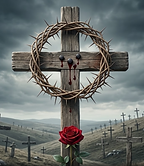


What is said about someone who claims "I know Him
Foundational Pre-Test: Commandments, Spirit, Truth, & Walking with Yeshua
1. According to 1 John 2:4, what is someone called who says "I know Him," but does not keep His commandments?
A) A beginner in the faith
B) A liar, and the truth is not in him
C) A seeker of understanding
D) A misunderstood believer
2. In Proverbs 28:9, what happens to the prayer of an individual who turns away their ear from hearing the Law (commandments)?
A) It is set aside for forty days
B) It is answered only with material blessings
C) Even their prayer is an abomination (detestable)
D) It is granted through angels
3. In John 14:15, what does Yeshua identify as the direct demonstration of love for Him?
A) "If you love Me, keep My commandments"
B) "If you love Me, give away all your goods"
C) "If you love Me, fast twice a week"
D) "If you love Me, sing new songs"
4. How does Psalm 119:142 and Psalm 119:151 define biblical truth?
A) Truth is an ever-changing human philosophy
B) Truth cannot be discovered by ordinary people
C) "Your law is truth" and "all Your commandments are truth"
D) Truth is found only in the historical chronicles of kings
5. According to Romans 8:9, what is true of anyone who does not have the Spirit of Christ (Yeshua)?
A) They belong to Him just the same
B) They are not His at all
C) They will receive the Spirit automatically in ten years
D) They have partial citizenship in heaven
6. On the Day of Pentecost (Acts 2:38), what did Peter instruct the people to do when they asked how to be saved and receive the Holy Spirit?
A) Bring costly silver and gold to the apostles
B) Repent, and be baptized in the name of Yeshua the Messiah for the remission of sins
C) Move into the wilderness away from all cities
D) Recite the genealogy of David from memory
7. According to Acts 5:32, to whom does God give the Holy Spirit?
A) To those who are wealthy and influential
B) Exclusively to ordained kings and temple priests
C) To those who obey Him
D) To anyone who asks, regardless of repentance
8. In 1 John 2:6, how is a believer expected to live if they claim to abide in Yeshua
A) To walk just as He walked
B) To follow the traditions of the Pharisees
C) To create their own standard of morality
D) To abandon all written scripture
9. In Romans 3:31, what does the Apostle Paul state about the relationship between faith and the Law (commandments)?
A) Faith makes the Law void and unnecessary
B) Faith destroys the Law permanently
C) Faith establishes the Law
D) Faith replaces all ancient scriptures
10. In Acts 17:2 and Luke 4:16, what was the regular, stated custom of both Yeshua and Paul regarding the Sabbath day?
A) Running trade businesses in the city center
B) Going into the synagogue to read, pray, and reason from the Scriptures
C) Declaring the seventh day abolished
D) Avoiding all public religious gatherings
Pre-Test Answer Key & Reference Notes
1. B) A liar, and the truth is not in him (1 John 2:4 — "He who says, 'I know Him,' and does not keep His commandments, is a liar, and the truth is not in him.")
2. C) Even their prayer is an abomination (detestable) (Proverbs 28:9 — "One who turns away his ear from hearing the law, even his prayer is an abomination.")
3. A) "If you love Me, keep My commandments" (John 14:15 — Yeshua explicitly connects love with active obedience.)
4. C) "Your law is truth" and "all Your commandments are truth" (Psalm 119:142, 151; compare with Yeshua's statement in John 17:17, "Your word is truth.")
5. B) They are not His at all (Romans 8:9 — "Now if anyone does not have the Spirit of Christ, he is not His.")
6. B) Repent, and be baptized in the name of Yeshua the Messiah for the remission of sins (Acts 2:38 — The apostolic pattern: Repentance → Water Baptism → Gift of the Holy Spirit.)
7. C) To those who obey Him (Acts 5:32 — "...and so also is the Holy Spirit whom God has given to those who obey Him.")
8. A) To walk just as He walked (1 John 2:6 — Yeshua's sinless obedience to the Father's commandments serves as the exact model for believers.)
9. C) Faith establishes the Law (Romans 3:31 — "Do we then make void the law through faith? Certainly not! On the contrary, we establish the law.")
10. B) Going into the synagogue to read, pray, and reason from the Scriptures (Luke 4:16; Acts 17:2 — Both Yeshua and Paul had the lifelong "custom" of gathering, reading, and teaching on the seventh-day Sabbath.)
Pre-Test Diagnostic Benchmark
Score: 9–10 / 10 (Ready): The student demonstrates a clear grasp of foundational terminology, the definition of biblical truth, and apostolic practice. Ready for the full 70-question exam.
Score: 7–8 / 10 (Review Recommended): Minor confusion on either Pauline defenses or the connection between the Spirit and obedience. Review Romans 3 and Acts 2–5 before the comprehensive test.
Score: Below 7 / 10 (Remediation Needed): Significant gaps in core covenantal concepts. Walk through the key scriptures (1 John 2, Proverbs 28, Acts 2) prior to attempting the 70-question exam.s own sacrifice.
Question to be answered?
Does fulfill mean to abolish?
Does human have the right to change someones name?
IF Jesus said all food is clean did he mean you can eat rat cat and dogs?
So if Jesus said “No one has ever gone into heaven except the one who came from heaven who is in heaven?
Do christian's have the wright to judge believers on the sabbath and other appointed days?
Can man make unclean animals clean? “
How can a secret rapture be secret if "Immediately after the tribulation of those days the sun will be darkened, and the moon will not give its light; the stars will fall from heaven…
Who will be taken? His elect from the four winds.a faithful remnant that walks in genuine obedience and trust rather than ethnic lineage alone
Who change the Sabbath?
Severing Pagan Practices: The four immediate prohibitions—abstaining from food polluted by idols, sexual immorality, strangled meat, and blood—addressed the core rituals common in pagan temple worship. The-council-of-Jerusalem
What is the blood covaunt The Forgiveness and Cleansing of Sins The primary coverage mentioned in the text is the remission and absolute forgiveness of sins.
"Why do you call me, 'Lord, Lord,' and do not do what I say?